Heat Rules Are Reshaping the Gulf Construction Calendar

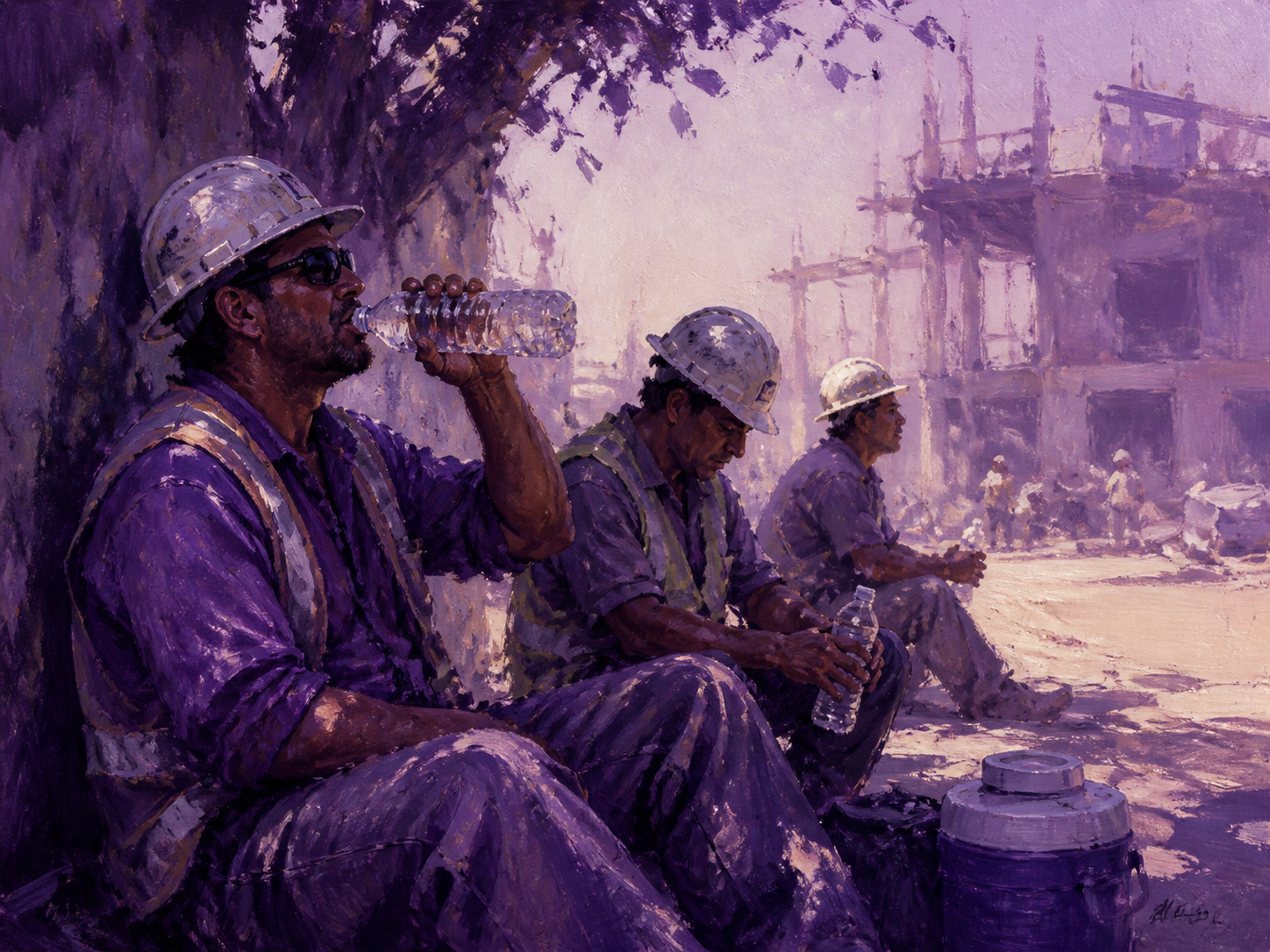
Every summer, the Gulf’s construction industry performs one of the largest coordinated schedule shifts in the world economy. Midday work bans – typically prohibiting outdoor labour from noon to 3 PM during peak summer months – now cover millions of workers across the UAE, Saudi Arabia, Qatar, Bahrain, Oman and Kuwait. What began as a seasonal safety measure has matured into a full regulatory architecture: enforced rest hours, mandatory shade and hydration, heat-stress training, and real penalties for violations.
The Gulf is becoming the world’s laboratory for working in extreme heat – and the lessons are being exported globally.
The rules have teeth
Modern Gulf heat regulation is not advisory. Labour ministries run inspection campaigns with thousands of site visits each summer. Violations bring fines, work stoppages and, in serious cases, restrictions on future hiring. Compliance is tracked digitally, and worker hotlines let crews report violations directly.
The result: heat-related incidents on regulated Gulf sites have fallen even as construction volumes hit record levels. The industry has shown that productivity and protection are not opposites – they are complements.
Planning around the sun
For contractors, the midday ban is now a planning discipline. Concrete pours shift to night. Critical-path outdoor tasks front-load into pre-dawn hours. Indoor fit-out trades absorb midday capacity. Project schedules that ignore the heat calendar simply fail; the best Gulf project managers now design summer programmes around protected hours the way they design around Ramadan working patterns.
Technology is accelerating the shift. Wearable heat-stress monitors, site weather stations and AI-driven schedule optimisation let employers protect workers without guessing.
Why it matters beyond the Gulf
As heatwaves lengthen across South Asia, Europe and the Americas, the world is watching how Gulf economies keep building through fifty-degree summers. The region’s answer – regulation with enforcement, engineering controls, and schedules that respect the climate – is becoming the global template.
For workers, the trajectory is what counts. The Gulf job of 2026 comes with heat protections that simply did not exist a decade ago. For employers, compliance is no longer a constraint to manage. It is a signal to the workforce – and to the world – that the region’s construction boom is built to last, and built to be safe.
About Huntr
Planning around heat windows is a forecasting problem. Huntr is the AI operating system for global workforce mobility, helping employers forecast demand and schedule compliant mobilisation. Learn more about Huntr or explore Forecast.
Further reading: International Labour Organization. Related: Sustainable Construction Roles in UAE Offer 48% Higher Pay.

Related Articles

Wage Protection Systems Across the GCC: A Worker’s Guide to Getting Paid on Time

Ireland Is Expanding Work Permits for Construction, Health and Transport – What It Means
