From Helper to Supervisor: The Upskilling Ladder in Gulf Construction

Ask a Gulf construction supervisor where he started, and the answer is often the same: as a helper, carrying materials and mixing mortar on a site like the one he now runs. The path from general labourer to certified tradesperson to chargehand to supervisor is the industry’s oldest success story – and today it is more structured, more valuable and more achievable than ever.
The first rung: a certified trade
The single highest-return investment a Gulf construction worker can make is a recognised trade certificate. Electrical work, welding, plumbing, scaffolding, HVAC and heavy equipment operation all carry formal certification routes, and certified tradespeople routinely earn 30 to 50 percent more than general labour. Certification converts experience into proof – and proof is what crosses borders.
The middle rungs: specialisation and safety
Beyond the trade itself, two specialisations accelerate progression. The first is safety: credentials like NEBOSH or IOSH training turn a tradesperson into a safety-valuable one, and safety officers are among the fastest-promoted roles on Gulf sites. The second is digital literacy. Workers who can operate site management apps, digital timesheets and equipment telematics become the interface between crews and management – and management notices.
The top rung: leading crews
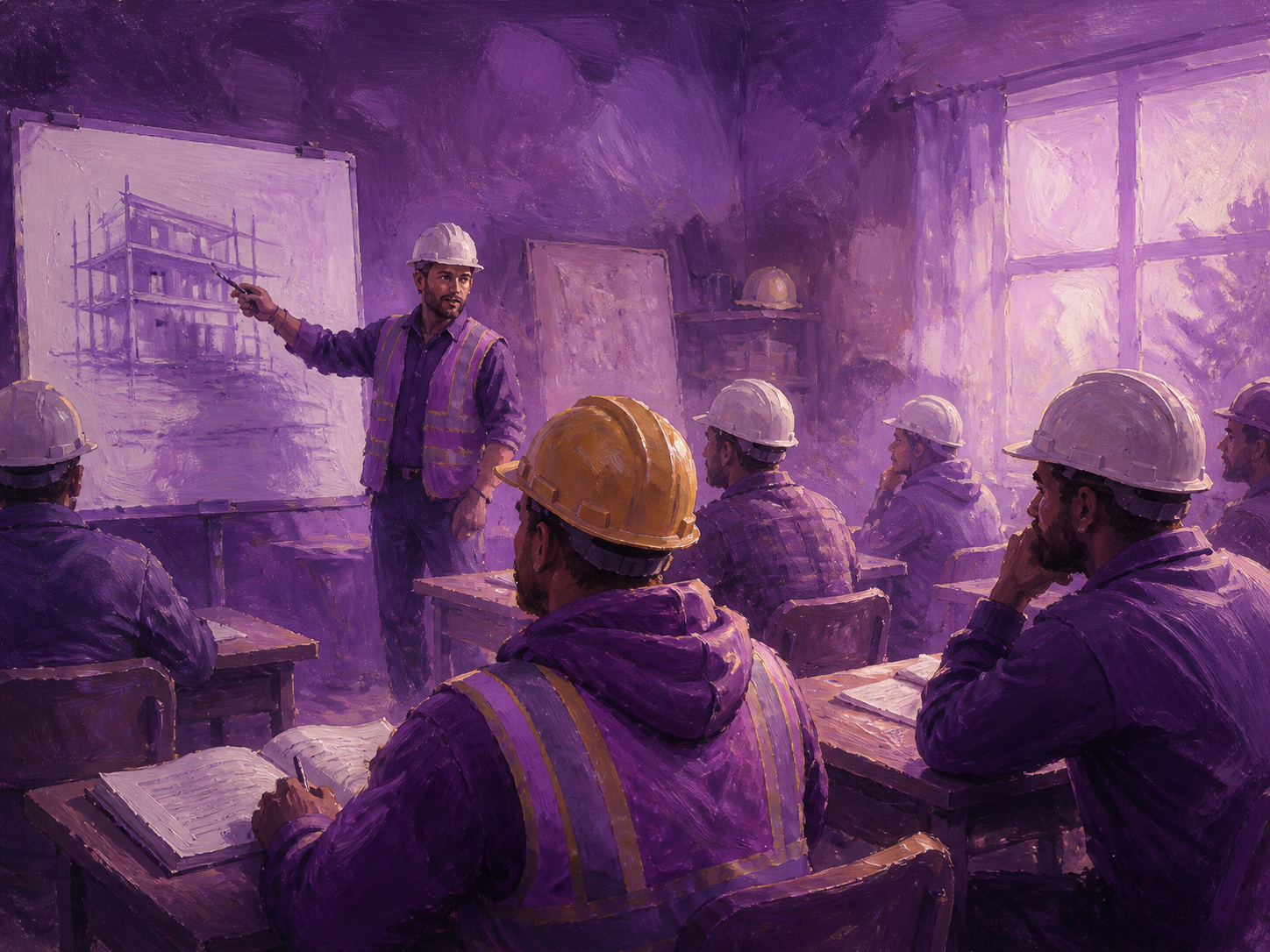
Chargehands and foremen combine trade depth with people skills: reading drawings, allocating labour, enforcing safety and communicating across the Gulf’s multilingual sites. English or Arabic proficiency multiplies a skilled worker’s supervisory ceiling, which is why language classes remain the most quietly profitable evening activity in any labour accommodation.
What employers gain from the ladder
Upskilling is not charity. Contractors with structured progression keep their best workers, reduce recruitment churn, and build the supervisory bench that giga-project scale demands. Training an existing, trusted worker costs a fraction of sourcing a stranger – and every internal promotion sends a message through the workforce that staying pays.
The ladder is real
The Gulf’s skyline was built by workers, and a significant share of the people directing that work today climbed the same ladder rung by rung. For any worker starting at the bottom, the route is visible: certify the trade, add safety and digital skills, learn the language, lead the crew. The sites are bigger than ever. So is the ladder.
About Huntr
Career ladders work when skills are verified and portable. Huntr is the AI operating system for global workforce mobility, giving workers skills-verified profiles that carry from job to job. Learn more about Huntr or explore Huntr ID.
Further reading: International Labour Organization. Related: 7 High-Demand Skills Every Blue-Collar Worker Should Invest In.

Related Articles

The Skilling Dividend: How India’s Training Missions Became Gulf Currency

From Manila to Dubai: What a Hospitality Career Ladder Looks Like in 2026