Safety Certification Is the Fastest Pay Raise in Construction

There is a pay raise available to most Gulf construction workers that requires no job change, no negotiation and no luck: a safety certification. Credentials like NEBOSH, IOSH or OSHA-aligned training convert an ordinary tradesperson into a safety-qualified one – and on Gulf sites, where safety is contractual, insured and audited, that conversion carries a premium that often outruns years of incremental raises.
Safety moved from obligation to market
Two decades ago, site safety in the region was patchy. Today it is a procurement requirement. Giga-project clients demand documented safety performance from contractors, contractors demand it from subcontractors, and the pressure lands on the workforce: sites need certified safety officers, safety-trained supervisors and workers who can operate inside permit-to-work systems.
The result is a genuine talent shortage. Certified safety professionals are recruited across borders, and safety-qualified tradespeople are promoted faster than their peers – because every contractor’s ability to win the next contract depends on the last project’s safety record.
What the credentials are worth
The hierarchy is well established. Entry-level safety awareness certificates make a worker compliant. IOSH or equivalent supervisor-level training makes a chargehand promotable. NEBOSH-level qualifications open the safety officer track – a professional role with salaries that sit far above trade wages and a career path into HSE management.
Equally important, safety credentials are portable across borders and industries. A NEBOSH certificate earned on a Dubai site is recognised in Riyadh, London and Dublin alike.
The employer equation
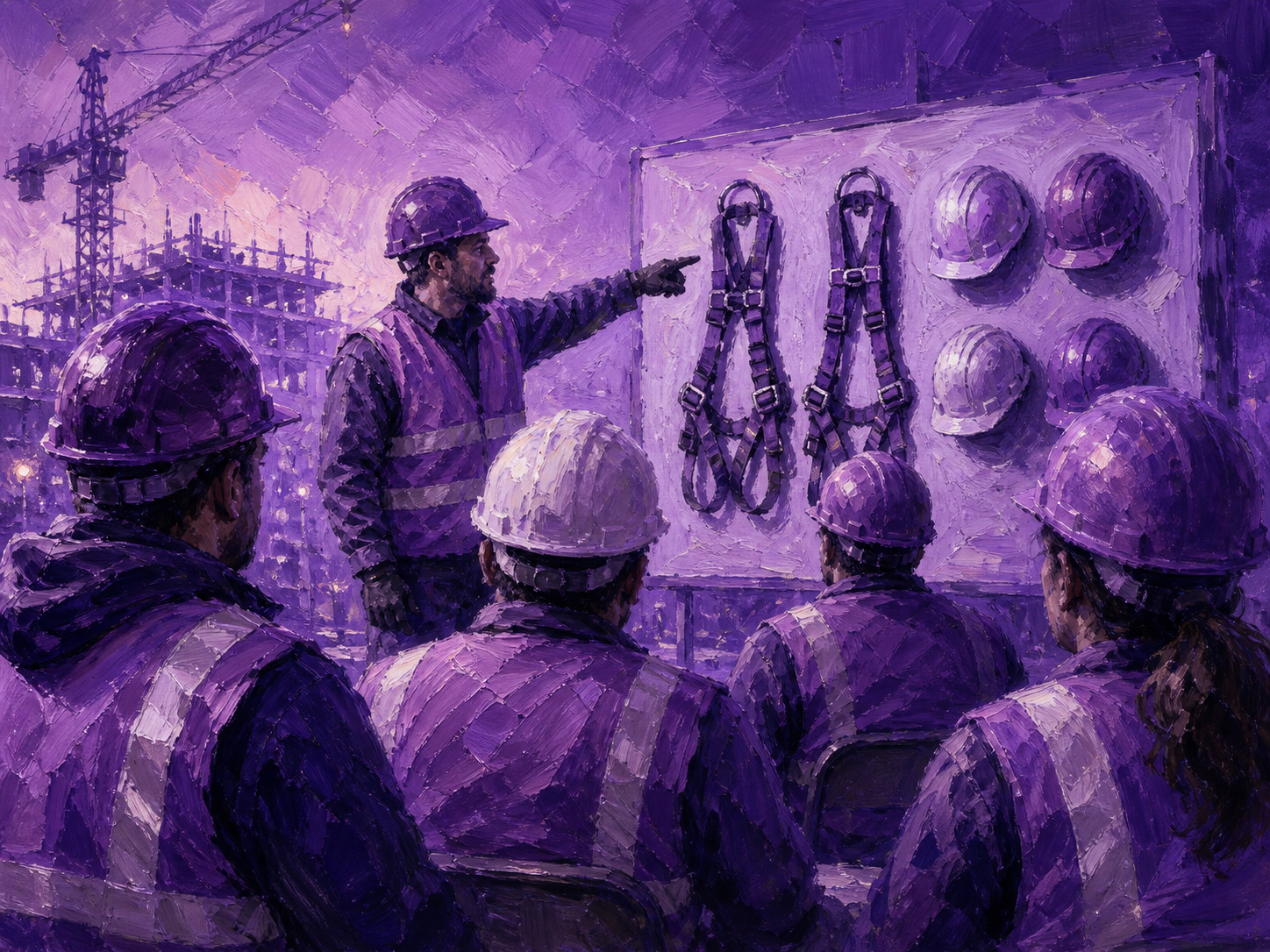
For employers, sponsoring safety training is among the highest-return investments in the workforce. Certified workers reduce incidents, and incidents are the most expensive events in construction – in stoppages, insurance, penalties and reputation. A safer site is a cheaper, faster, more bankable site.
There is a retention effect too. Workers who receive employer-sponsored certification stay longer – partly from gratitude, partly because their new skills deepen their role. Training is loyalty purchased at a discount.
Start here
For any worker on a Gulf site today, the path is short: ask about the next safety course, take it, certificate it, and let the credential do the negotiating. In the region’s labour market, the fastest way up is the safest way up.
About Huntr
Certifications only pay when employers can see and verify them. Huntr is the AI operating system for global workforce mobility, giving workers skills-verified profiles that put credentials in front of employers. Learn more about Huntr or explore Huntr ID.
Further reading: NEBOSH. Related: 7 High-Demand Skills Every Blue-Collar Worker Should Invest In.

Related Articles

Green Skills, Premium Pay: EV and Solar Roles in the 2026 Gulf Market