Bahrain’s Logistics Build-Out Is Creating a Warehouse Workforce Boom

Bahrain has never been the Gulf’s biggest economy, but it has always been one of its smartest about geography. Sitting between Saudi Arabia’s vast consumer market and the sea lanes of the Gulf, the Kingdom has spent years building itself into a logistics hub – a new causeway planned to Saudi Arabia, an expanded Khalifa Bin Salman Port, a growing airport cargo operation, and free-zone warehousing filling up with regional distribution centres.
The result is a quiet employment story that deserves more attention: logistics is becoming one of Bahrain’s fastest-growing sources of frontline jobs.
The warehouse economy
Modern logistics is a labour story. Every fulfilment centre needs pickers, packers, forklift operators, inventory controllers and last-mile coordinators. Bahrain’s e-commerce growth – supercharged by Saudi customers ordering through Bahraini hubs – has turned warehouse work from a back-office afterthought into a career path with real progression.
Wages for certified forklift operators and inventory specialists have risen steadily, and employers increasingly compete for workers with GCC warehouse management system experience – the same WMS platforms used from Dubai to Dammam.
Skills that travel
Logistics skills are among the most portable in the Gulf. A forklift licence, WMS proficiency or dangerous-goods handling certification earned in Bahrain transfers directly to Saudi Arabia, the UAE and beyond. For workers from India, Nepal, Bangladesh and the Philippines, logistics offers something construction often cannot: year-round indoor work, predictable shifts and a skills ladder that leads to supervisory roles.
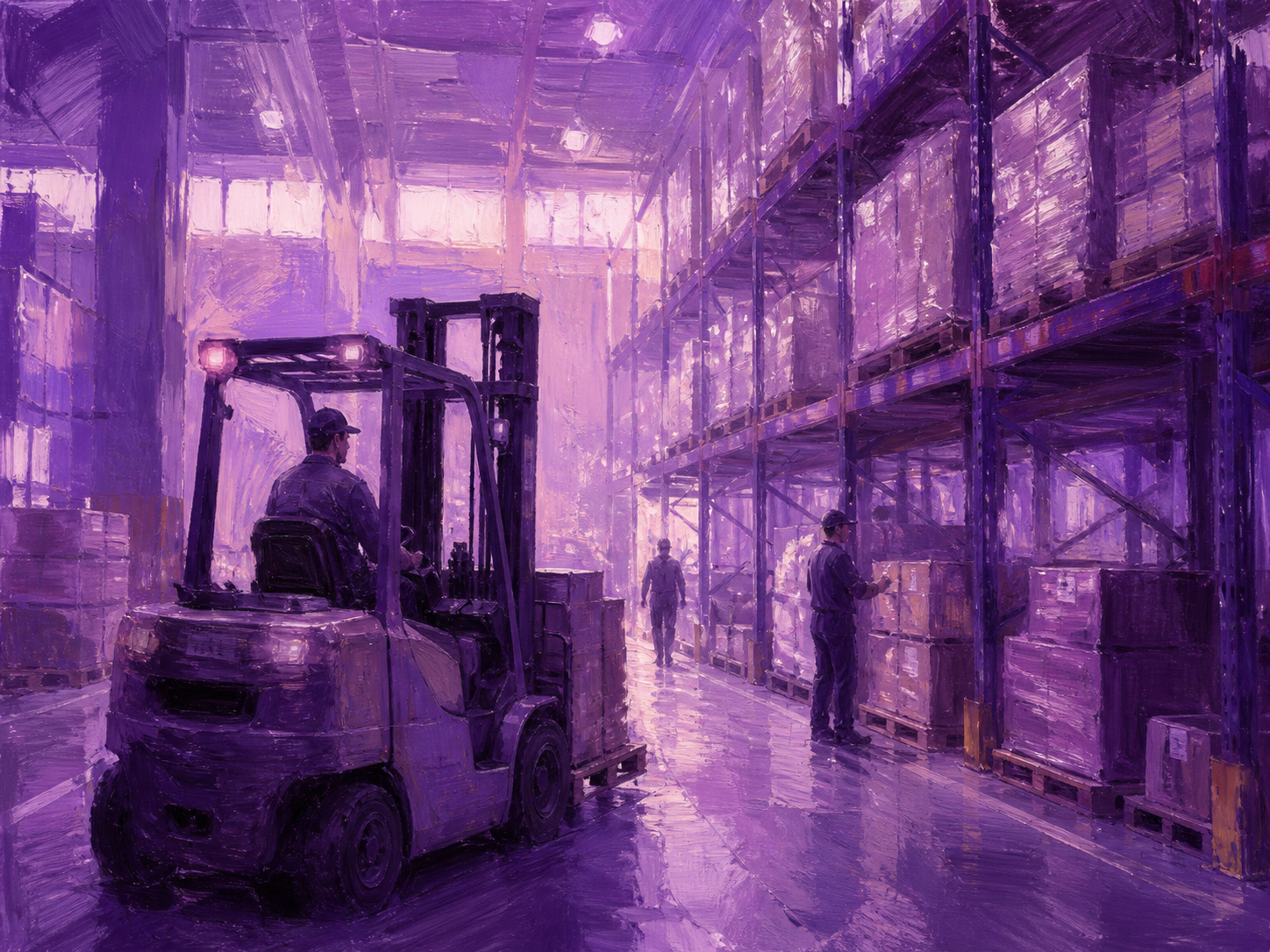
Employers, meanwhile, face the sector’s defining challenge: churn. Warehouse roles with poor shift design or unclear progression see turnover rates that destroy productivity. The operators getting retention right – air-conditioned facilities, fair overtime, visible promotion paths – are the ones the workforce talks about in the labour-source markets.
The road ahead
With Gulf trade volumes growing and Saudi-Bahrain connectivity deepening, Bahrain’s logistics workforce demand is set to climb through the decade. For workers, it is a corridor worth watching: lower living costs than Dubai, direct exposure to the Saudi market, and skills that travel anywhere in the region. For the Gulf’s labour ecosystem, it is proof that the frontline economy now extends far beyond the construction site.
About Huntr
Warehouse and logistics hiring at scale is a matching problem. Huntr is the AI operating system for global workforce mobility, matching verified workers to the employers building the Gulf’s logistics backbone. Learn more about Huntr or explore Match.
Further reading: International Labour Organization. Related: How Port Investments Are Reshaping Frontline Workforce Job Migration.

Related Articles

Oman Vision 2040 and the Next Gulf Hiring Wave

Qatar After the World Cup: Where the Workforce Went Next