Why Accommodation, Food and Transport Now Decide Who Wins Frontline Talent

In Gulf frontline hiring, the salary gets the headline – but the benefits decide the signature. Ask workers why they chose one employer over another at near-identical pay, and the answers are remarkably consistent: the quality of the accommodation, the food, the transport, and whether these arrive as promised. In a tightening regional labour market, benefits have become the real competitive weapon.
The workers’ hierarchy of needs
Frontline workers evaluate offers the way economists wish everyone did: total living standard, not nominal wage. A salary of AED 1,500 with clean, uncrowded housing, decent food and reliable transport beats AED 1,700 with a two-hour bus ride and eight men to a room. Workers know this, discuss it across source-country networks, and vote with their contracts.
Regulation has raised the floor. Labour accommodation standards now mandate space, sanitation and amenities, and inspection regimes enforce them. But the market rewards employers who build above the floor: recreation facilities, Wi-Fi, money-transfer access and medical care are the details that fill a camp’s reputation back home.
The economics of getting it right
The math favours the generous. Replacing a frontline worker costs far more than the incremental spend on better housing or food – sourcing, visas, flights, training and lost productivity stack into thousands of dirhams per departure. Employers with high-standard accommodation report materially lower attrition, and lower attrition is margin.
There is also a compliance angle. Clients auditing labour supply chains increasingly inspect worker welfare directly. The quality of the camp is now part of the bid.
The word travels
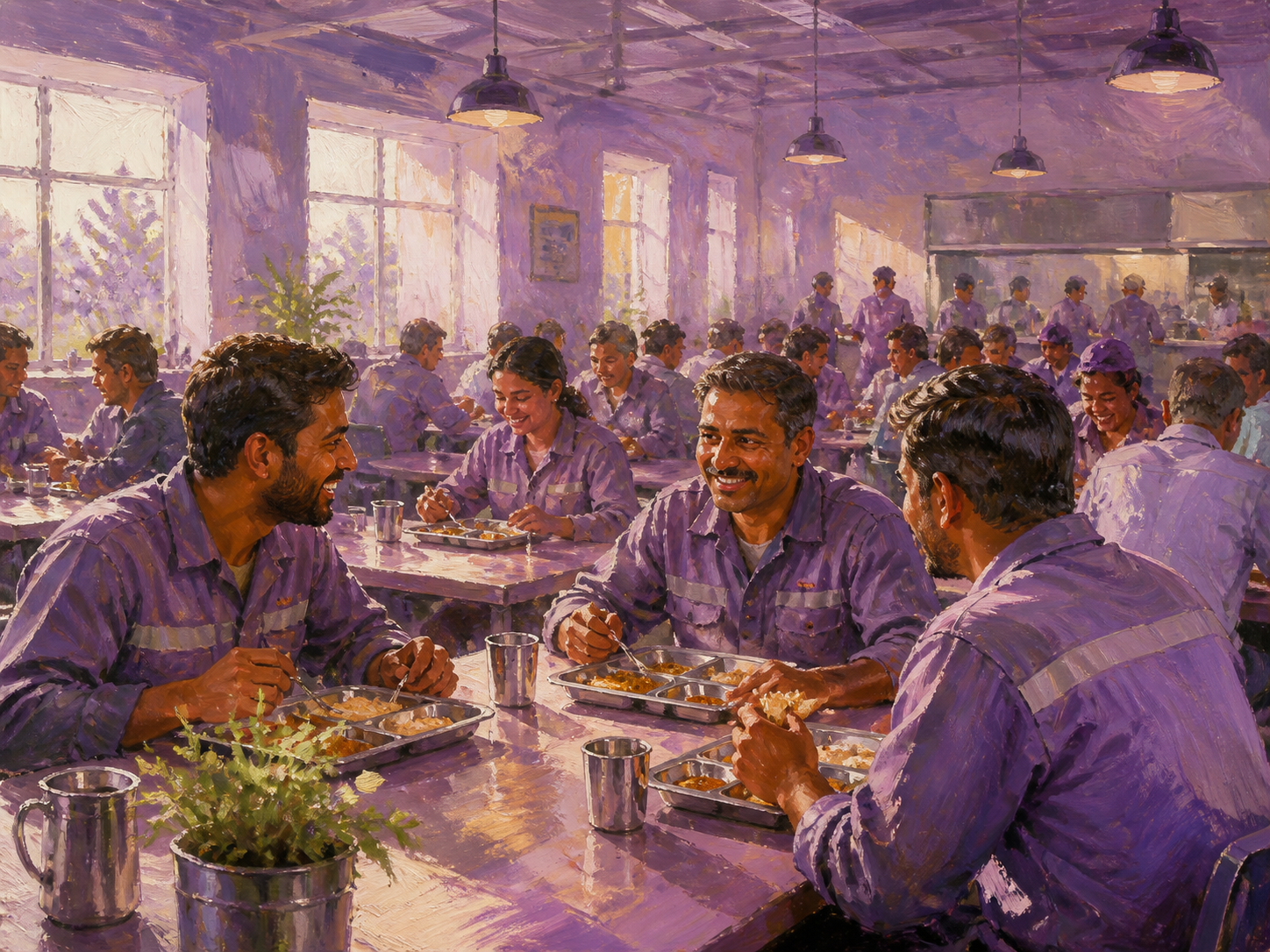
Source-country labour markets run on information. A worker’s video call home from a clean room with good food recruits the next ten workers from his district. A photo of a broken bunk and a crowded mess hall does the opposite, at scale, forever. Reputation compounds in both directions.
The takeaway
Pay matters. But in the Gulf’s frontline labour market, the war for talent is won in the accommodation block, the canteen and the bus schedule. Employers who treat benefits as cost centres will keep rehiring. Employers who treat them as the product will keep their workforce – and inherit everyone else’s.
About Huntr
Employers who compete on total package need to reach workers with the full picture. Huntr is the AI operating system for global workforce mobility, connecting employers and workers with transparent, verified offers. Learn more about Huntr or explore Enterprise.
Further reading: International Labour Organization. Related: UAE Emerges as Middle East’s Top Destination for Migrant Workers Amidst Commitment to Worker Welfare.

Related Articles

Retention Starts at the Labour Camp: What Employers Get Wrong About Frontline Retention

Employer Branding Isn’t Just for Offices: Why Workers Choose One Contractor Over Another